Garment-Dyed Tees That Earn Their Place in a Real Wardrobe
A good t-shirt is one of those rare pieces that quietly does most of the heavy lifting in a man's wardrobe. Worn under an open overshirt on a cool morning in Fitzroy, paired with chinos for a weekend market run, or thrown on after a surf at Bondi, the right tee slides between roles without ever looking out of place. Yet most men have accumulated a drawer full of options that let them down within a season or two: stretched necks, twisted side seams, colours that look tired after five washes.
Garment-dyed tees represent a different approach to a familiar staple. Rather than cutting and sewing fabric first, then bleaching or adding colour, the finished garment goes into the dye bath as a complete piece. That subtle shift in production changes how the cotton feels from the first wear, how the colour settles across seams, and how the shirt behaves over years of regular use. For anyone trying to buy less and wear things longer, the category deserves a closer look.
This guide focuses on the practical side of choosing and caring for these pieces — what separates a tee that will still look sharp in five years from one that loses its shape by the second summer. It draws on how these shirts are actually worn, washed, and replaced across Australian wardrobes, where the climate and washing habits can be unusually punishing on lightweight cotton.
How the Garment-Dye Process Actually Changes the Tee
Standard tees are usually made from pre-dyed fabric, where large rolls of cotton are coloured before being cut into patterns. Garment dyeing flips the order. The cut and sewn shirt — already assembled with finished hems, cuffs, and ribbed collars — is dipped into a dye vat, so the pigment penetrates the fibres of the fully constructed piece. The result is a softer initial hand-feel because the dye bath slightly relaxes the cotton yarns that were held under tension during knitting.
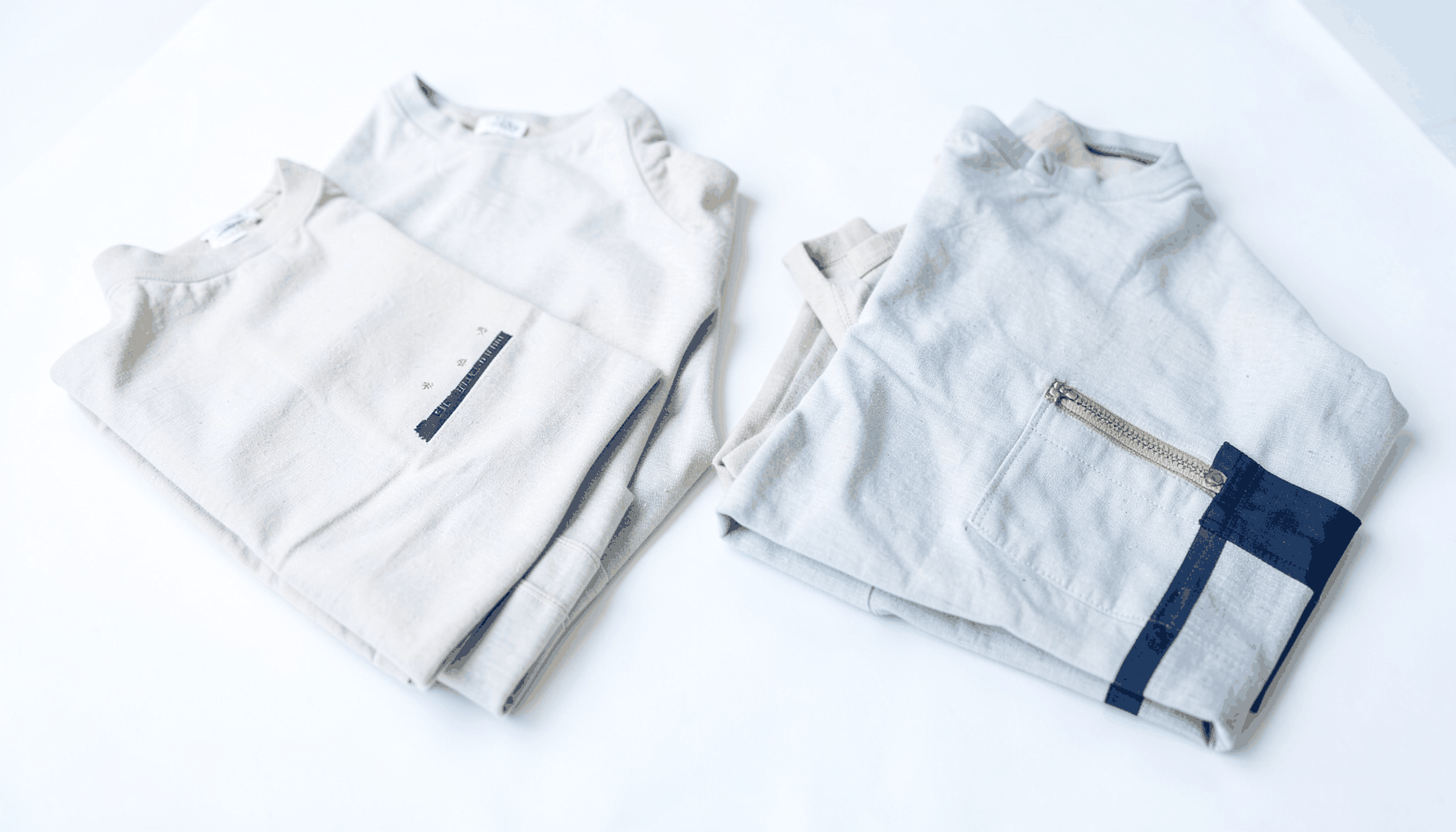
That softening is one reason garment-dyed styles are often described as feeling "broken-in" from the box. There is no scratchy, board-stiff first impression. The dye also settles unevenly across the seams, ribbing, and pockets, producing the subtle tonal variation that gives these shirts their slightly weathered character. Some manufacturers exploit this by overdyeing, washing, or garment-dyeing twice to bring out depth.
For shoppers who dislike the shiny, plastic-like finish of heavily treated cottons, this process offers an appealing alternative. The pigments sit on the surface of the fibre rather than coating it, which is also why a garment-dyed tee tends to age into something more interesting over time. A classic navy slowly drifts toward a softer slate; an off-white develops a faint cream patina around the cuffs and hem.
Cotton Weight, GSM, and the Feel That Lasts
Weight matters more than most buyers realise. A tee advertised as "premium" at 130 grams per square metre will rarely survive more than a couple of seasons of regular wear, particularly in a climate like Brisbane's where shirts can be worn and washed twice a week. The threshold where cotton starts to feel substantial without becoming stiff is somewhere around 180 to 220 GSM, and most well-made garment-dyed options sit in that range.
Heavier mid-weight cotton, typically 200 to 240 GSM, drapes better, holds its shape through repeated laundering, and tends to mask the slight pilling that lighter knits develop under the arms and across the chest. Lighter weights, around 140 to 160 GSM, have their place as underlayers or summer-only pieces, but they generally do not have the structure to maintain a clean silhouette past the second summer.
Long-staple cottons — Pima, Egyptian, and the increasingly common Sea Island varieties — produce longer fibres that resist pilling and create a smoother surface. These are the cottons most often used in heritage-leaning labels stocked by retailers focused on longevity over trend cycles. A tee woven from short-staple cotton might feel soft at first, but it will fuzz and lose its shape noticeably within twelve months. Worth checking the label, the product description, or simply asking.
Construction Details Worth Inspecting Before You Buy
The way a tee is built has more influence on whether it keeps its shape than any marketing claim about cotton origin. A few small things to look at closely when browsing online or in store. First, the shoulder seam: it should sit precisely at the edge of the shoulder bone, with no pulling toward the neck or drooping over the upper arm. On garment-dyed pieces, this seam is often a chain stitch rather than a lock stitch, giving it a slightly raised, decorative look that also allows the seam to relax with wear rather than break.
Second, the side seam. Cut-and-sewn tees with proper side seams contour to the body and hold their shape better than tubular bodies. A side-seamed tee won't twist around the torso after a wash, which is one of the most common complaints with cheaper alternatives.
Third, the collar. The ribbing should be firm enough to snap back when stretched but not so stiff that it feels like a band. Twin-needle topstitching along the neckline reinforces the weakest part of the shirt, which is where most tees ultimately fail. The hem should also have a twin-needle finish with a small allowance — too short and the hem curls up after the first wash; too long and the shirt looks oversized.
Finally, check that any labelling is either printed, screen-stamped, or attached with a fold-and-stitch technique rather than a chunky satin neck label that will scratch. Many of the heritage-leaning brands in this category have already moved away from traditional labels, recognising that comfort is part of longevity.
Colour, Patina, and How to Choose a Shade That Travels
Garment-dyed colours behave differently from piece-dyed ones. Because the dye is applied to a fully constructed garment, the colour tends to be slightly less saturated, with softer edges around seams and ribbing. This is the visual signature that makes the category recognisable on the shelf.
For an everyday rotation, the most forgiving shades are usually a faded black, a true navy, an ecru or off-white, a sage or eucalyptus green, and a mid-stone. Each of these pairs easily with denim, chinos, and the warm earth tones that have dominated Australian menswear over the past few seasons. Bright colours are not off-limits, but they tend to fade more visibly and are harder to mix into a wardrobe built around neutral basics.
A useful test for how a colour will age: hold the shirt up and look at it against natural daylight. If it reads as flat or dull in full sun, it will only look duller after a few months of wear. If it has subtle variation and depth from the start, it will develop a richer patina over time. Many garment-dyed brands deliberately produce colours that look slightly washed or uneven — this is intentional and should not be mistaken for a manufacturing flaw.
Fit, Sizing, and How Australian Brands Cut Their Tees
Fit is where most online tee purchases go wrong. Sizing varies significantly between labels, and a Medium in one brand can fit like a Large in another. Garment-dyed tees also tend to relax slightly after the first wash, so a piece that feels snug in the change room will often feel just right after a cycle in the machine.
Australian body types are generally broader through the shoulders and chest than the slim-cut European fit that dominates many global brands. Labels cut for the local market — whether Australian-owned or simply chosen with Australian customers in mind — usually offer a more relaxed shoulder and a longer body length. This matters because a tee that rides up at the waist the moment you raise your arms will quickly become a drawer piece rather than a regular wear.
When measuring, the shoulder seam should align with the bony point of the shoulder, the sleeve should sit roughly halfway down the upper arm, and the body should fall to the middle of the fly without bunching. A tee that ticks all three of those boxes will work whether worn tucked for a more dressed look on a Friday arvo at the office or untucked for a Sunday brekkie at the markets. Worth noting that many of the better heritage labels tend to run slightly long in the body, which suits the Australian preference for untucked casual wear.
Care Habits That Keep the Shape From Day One
The fastest way to destroy a garment-dyed tee is to wash it hot, tumble it dry, and treat it roughly. Cotton is at its weakest when wet, and the agitation of a hot wash followed by the heat of a dryer breaks down the fibres quickly. Cold or lukewarm water, a gentle cycle, and a flat dry on the line will keep most well-made tees in good shape for years.
Australian washing habits often push in the other direction. Many households still default to warm washes for everything, and the climate encourages drying clothes quickly outside in strong sun. The sun does fade colour over time, so it is worth drying garment-dyed pieces in the shade or inside out to slow that process. Folding rather than hanging also helps — hanging tees stretches the shoulders out of shape, particularly with heavier weights.
Ironing is not usually necessary if the shirt is folded flat straight off the line, but if needed, a warm iron on the reverse side will refresh the surface without crushing the cotton fibres. Avoid fabric softeners, which coat the fibres and reduce the absorbency and breathability of the cotton. With these simple habits, a properly made garment-dyed tee should easily outlast several cheaper alternatives stacked in the drawer.
Building a Small Rotation That Works Year-Round
Five to seven well-chosen tees will out-perform a wardrobe of twenty impulse purchases every time. A practical rotation might include a faded black, a navy, an ecru, a stone, and one or two accent colours that suit the wearer's skin tone and existing trousers. From there, layering pieces — overshirts, light knits, chore jackets, and a proper cotton or wool cardigan — extend the use of each tee through most of the Australian year.
For shoppers in cooler southern cities like Hobart or Melbourne, where a single summer rarely offers more than a handful of genuinely warm days, layering is the answer. A garment-dyed tee under a heavy overshirt and an unstructured blazer is a quietly smart look that works for the office, the bar, or the gallery opening. In the north, where the humidity in Darwin or Cairns makes any layer feel oppressive for half the year, lighter-weight garment-dyed options in breathable weaves are the practical choice.
The whole point of investing in better basics is to stop thinking about them. A tee that holds its shape, ages well, and disappears into a working wardrobe is one less decision each morning. Browse the Focarth edit of garment-dyed styles and start narrowing down the colours and weights that match your own rotation — once you find the right few, they will quietly do the work for years to come.